
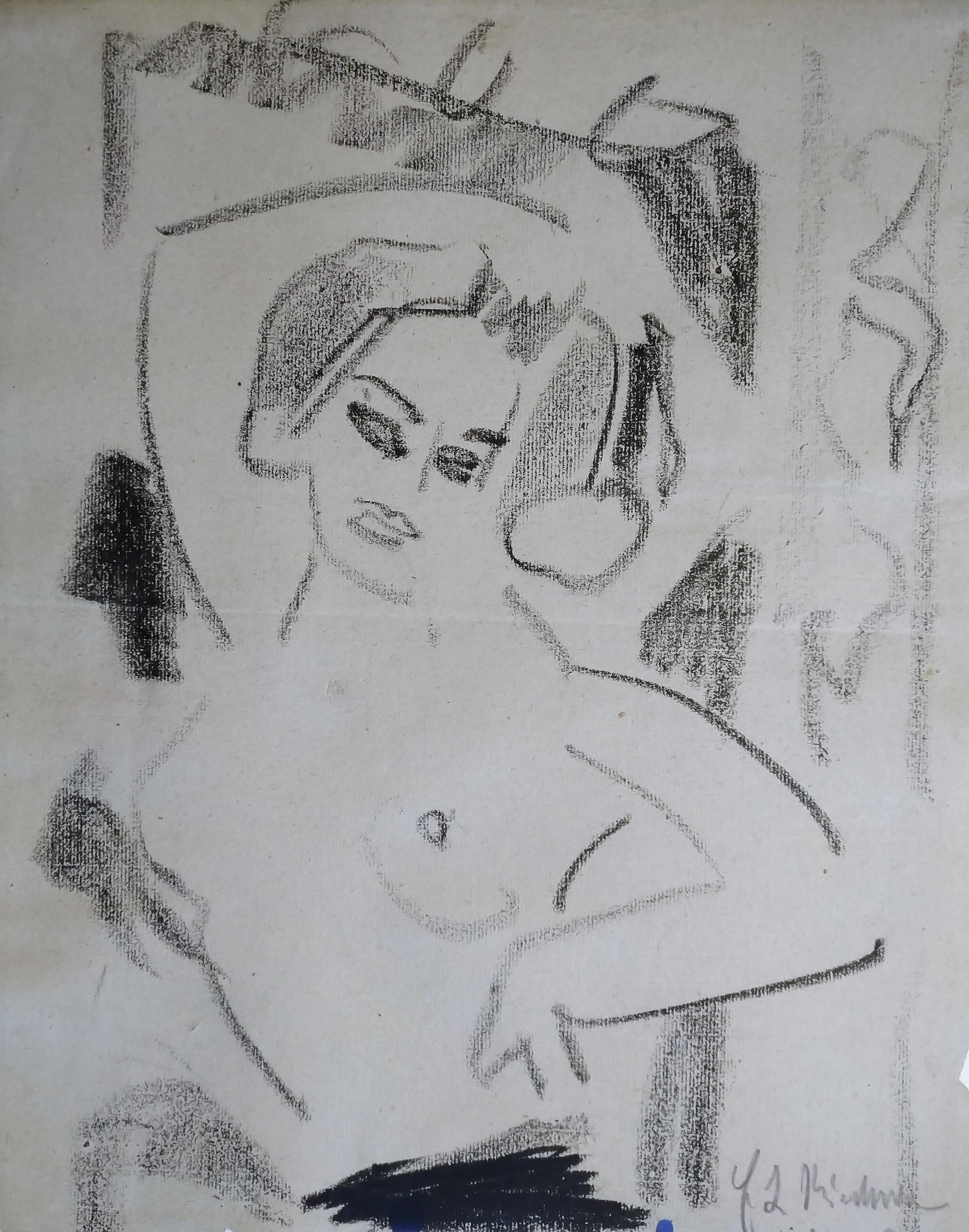


- Tänzerin – Dodo (Dancer – Dodo)
- 1909 - 1909
- Schwarze Kreide auf festem, grauem Bütten (Black chalk on strong, grey hand-made paper)
- 42.5 x 34 cm
Doris Große (Dodo):
Little was known about Doris Große until Bernd Hünlich presented his research at a symposium in Davos in 1988.
According to his findings, she was born on 5 June 1884 as the ninth child of Friedrich August Große, the station restaurant manager in Dürrröhrsdorf near Bautzen. When she was nine years old, her parents moved to Bautzen and bought the Carolagarten restaurant. A year later, her father died, and when Doris was 18, her mother also passed away. As an orphan, she went to Dresden with her
sisters Armgart and Paula and worked as a saleswoman. It is unclear when she
met Kirchner. Once again, it is a postcard that confirms her surname and clarifies one detail. On 12 August 1910, Max Pechstein, Erich Heckel and Ernst Ludwig Kirchner wrote to her from Moritzburg, and so her address at that time is now known: Blochmannstraße 3. (Fig. 5)
After that, all traces of Dodo were lost. Kirchner went to Switzerland.
He did not see her again. Even when he was in Dresden in the spring of 1926, coming from Davos, he did not visit her. ‘Only a quarter of a century later,’ according to Bernd, “did he see her again.
He never saw her again. Even when he was in Dresden in the spring of 1926, coming from Davos, he did not visit her. ‘It was not until a quarter of a century later,’ says Bernd Hünlich, “that signs of life from Doris and Armgard Große reappeared: at the end of 1935, they were registered as the owners of a shared apartment at Stephanplatz. Both still bore their maiden names, meaning they had remained unmarried. Doris’s occupation is listed as ‘hairdresser.’ At the end of 1936, the two sisters moved to nearby Borsbergstraße, and the following year they retired together. The last news of Doris Große comes from the year of Kirchner’s death: she and her sister are listed for the last time in the 1938 address book .Dodo’s date of death is now known: twenty-one years after Kirchner, she died on 2 September 1959 in Dresden, at Wittenbergerstraße 75, at the age of 75.
Just how deeply she lived in Kirchner’s heart is revealed in an entry in his ‘Davos Diary’: “You, Dodo, with your hard-working hands. Quiet and delicate and so beautifully white… You gave me the strength to speak about your beauty in the purest image of a woman. I know that you sometimes think of me, we have both had happiness and torment … guide me … with your love and patience and your
delicate colours always.‘ Kirchner, who throughout his life tailored everything to himself in his self-centredness, speaks of ’the two of us”. That didn’t happen often. He expresses gratitude – something else that was rarely part of his vocabulary. And in these lines, he captured what this ‘model’ gave him: ‘The power of language.’
Painter and model.
When it comes to the subject of ‘painter and model,’ a pattern often emerges. Here is the ruthless man; there is the girl, exploited and later abandoned. With Kirchner and ‘Dodo’ ,too, this is how it appears at first. And then there is this completely different perspective: the creative process encompasses not only the eye, the hand and the ruthlessness of the creator. In other words, Kirchner knows and recognises the contribution of the model: ‘You gave me the power of speech.’ Paintings and drawings arise from the interaction between artist and model. What the artist contributes is well known. And Dodo? What does she contribute? She “leads”. This is an extraordinary observation: the model gives the power of speech and ‘leads’. Where does Dodo lead? Dodo ‘leads’ the painter ‘through your beauty’ into “ecstasy”. ‘Ek-stasy’ is the stepping out of time, which is always divided into the same units (seconds, minutes, hours); it is the departure from an everyday life of repetitions, which is always shaped by the same norms. Dodo ‘leads’ Kirchner into a time free of such mechanical constraints. What happens on paper and on canvas takes place in other calendars.
Painter and model. Here the man who determines everything; there the model, merely a passive occasion? Such preconceptions are fuelled by artists such as Munch and Picasso. With Kirchner and ‘Dodo,’ it also looks that way at first glance. And then everything changes. Perhaps Dodo is the one who felt most deeply that living with someone like Kirchner was not based on mutual give and take. Kirchner takes. She gives. Her greatness: she expects nothing in return, makes no demands. Dodo understood that the artist is not defined by participation in the general. The artist must – otherwise he cannot fulfil his task– live by other laws.
This became very clear in October 1911: when Kirchner left Dresden to seek his artistic future not in this city but in Berlin, she stayed behind. She accepted that he was taking this path. She was a stopover – no more and no less. ‘Art is my only lover,’ he had written. And that meant that Dodo’s place in his life was temporary; her role was a temporary one, regardless of how much she gave him and could have given him.
In this decisive situation between going along and separating, she accepted that something was coming to an end. Ultimately, she realised that in Berlin she would be a hindrance to him, an appendage, and eventually a burden. Kirchner left Dresden to pursue his artistic career in a new challenge – one to which Dodo no longer belonged.
He had to leave her behind in order to move forward. All he had left were memories: ‘I know that you sometimes think of me; we both had happiness and torment.’
He had to leave her behind in order to move forward. All he had left were memories: ‘I know that you sometimes think of me; we both had happiness and torment.’
Little was known about Doris Große until Bernd Hünlich presented his research at a symposium in Davos in 1988.
According to his findings, she was born on 5 June 1884 as the ninth child of Friedrich August Große, the station restaurant manager in Dürrröhrsdorf near Bautzen. When she was nine years old, her parents moved to Bautzen and bought the Carolagarten restaurant. A year later, her father died, and when Doris was 18, her mother also passed away. As an orphan, she went to Dresden with her
sisters Armgart and Paula and worked as a saleswoman. It is unclear when she
met Kirchner. Once again, it is a postcard that confirms her surname and clarifies one detail. On 12 August 1910, Max Pechstein, Erich Heckel and Ernst Ludwig Kirchner wrote to her from Moritzburg, and so her address at that time is now known: Blochmannstraße 3. (Fig. 5)
After that, all traces of Dodo were lost. Kirchner went to Switzerland.
He did not see her again. Even when he was in Dresden in the spring of 1926, coming from Davos, he did not visit her. ‘Only a quarter of a century later,’ according to Bernd, “did he see her again.
He never saw her again. Even when he was in Dresden in the spring of 1926, coming from Davos, he did not visit her. ‘It was not until a quarter of a century later,’ says Bernd Hünlich, “that signs of life from Doris and Armgard Große reappeared: at the end of 1935, they were registered as the owners of a shared apartment at Stephanplatz. Both still bore their maiden names, meaning they had remained unmarried. Doris’s occupation is listed as ‘hairdresser.’ At the end of 1936, the two sisters moved to nearby Borsbergstraße, and the following year they retired together. The last news of Doris Große comes from the year of Kirchner’s death: she and her sister are listed for the last time in the 1938 address book .Dodo’s date of death is now known: twenty-one years after Kirchner, she died on 2 September 1959 in Dresden, at Wittenbergerstraße 75, at the age of 75.
Just how deeply she lived in Kirchner’s heart is revealed in an entry in his ‘Davos Diary’: “You, Dodo, with your hard-working hands. Quiet and delicate and so beautifully white… You gave me the strength to speak about your beauty in the purest image of a woman. I know that you sometimes think of me, we have both had happiness and torment … guide me … with your love and patience and your
delicate colours always.‘ Kirchner, who throughout his life tailored everything to himself in his self-centredness, speaks of ’the two of us”. That didn’t happen often. He expresses gratitude – something else that was rarely part of his vocabulary. And in these lines, he captured what this ‘model’ gave him: ‘The power of language.’
Painter and model.
When it comes to the subject of ‘painter and model,’ a pattern often emerges. Here is the ruthless man; there is the girl, exploited and later abandoned. With Kirchner and ‘Dodo’ ,too, this is how it appears at first. And then there is this completely different perspective: the creative process encompasses not only the eye, the hand and the ruthlessness of the creator. In other words, Kirchner knows and recognises the contribution of the model: ‘You gave me the power of speech.’ Paintings and drawings arise from the interaction between artist and model. What the artist contributes is well known. And Dodo? What does she contribute? She “leads”. This is an extraordinary observation: the model gives the power of speech and ‘leads’. Where does Dodo lead? Dodo ‘leads’ the painter ‘through your beauty’ into “ecstasy”. ‘Ek-stasy’ is the stepping out of time, which is always divided into the same units (seconds, minutes, hours); it is the departure from an everyday life of repetitions, which is always shaped by the same norms. Dodo ‘leads’ Kirchner into a time free of such mechanical constraints. What happens on paper and on canvas takes place in other calendars.
Painter and model. Here the man who determines everything; there the model, merely a passive occasion? Such preconceptions are fuelled by artists such as Munch and Picasso. With Kirchner and ‘Dodo,’ it also looks that way at first glance. And then everything changes. Perhaps Dodo is the one who felt most deeply that living with someone like Kirchner was not based on mutual give and take. Kirchner takes. She gives. Her greatness: she expects nothing in return, makes no demands. Dodo understood that the artist is not defined by participation in the general. The artist must – otherwise he cannot fulfil his task– live by other laws.
This became very clear in October 1911: when Kirchner left Dresden to seek his artistic future not in this city but in Berlin, she stayed behind. She accepted that he was taking this path. She was a stopover – no more and no less. ‘Art is my only lover,’ he had written. And that meant that Dodo’s place in his life was temporary; her role was a temporary one, regardless of how much she gave him and could have given him.
In this decisive situation between going along and separating, she accepted that something was coming to an end. Ultimately, she realised that in Berlin she would be a hindrance to him, an appendage, and eventually a burden. Kirchner left Dresden to pursue his artistic career in a new challenge – one to which Dodo no longer belonged.
He had to leave her behind in order to move forward. All he had left were memories: ‘I know that you sometimes think of me; we both had happiness and torment.’
He had to leave her behind in order to move forward. All he had left were memories: ‘I know that you sometimes think of me; we both had happiness and torment.’
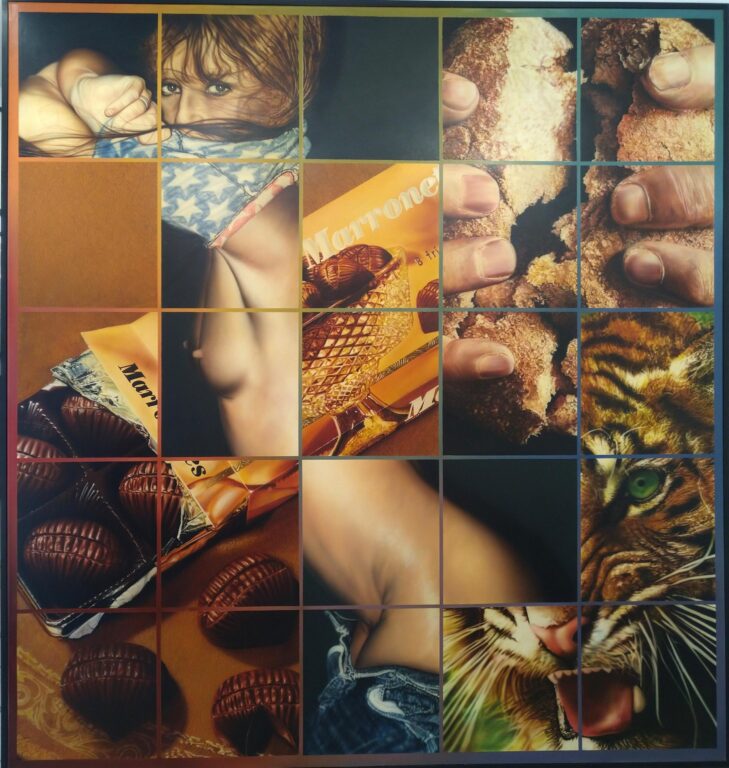
- HOFFNUNG / HOPE – GMT Galerie Marc Triebold 2026
- January 23, 2026 - May 24, 2026
- GMT Galerie Marc Triebold, Baselstrasse 88, CH-4125 Riehen / Basel
-
Siegfried Anzinger, Alexander Archipenko, Georg Baselitz, Joseph Beuys, Georges Braque, Elisabetta Brodaska, Jürgen Brodwolf, Bruno Ceccobelli, Marc Chagall, Salvador Felipe Jacinto Dalí i Domènech, ab 1982 Marqués de Dalí de Púbol, Martin Disler, Joseph Ebnöter, Hans Erni, Max Ernst, Emile-Othon Friesz, Alberto Giacometti, George Grosz, Erich Heckel, Utagawa (Ando) Hiroshige, Katsushika Hokusai, Karl Horst Hödicke, Ernst Ludwig Kirchner, Livia und Michael Kubach und Kropp, Anna & Wolfgang Kubach-Wilmsen, Wilhelm Kuhnert, Richard Lindner, Fernand Léger, August Macke, Franz Marc, Henri Matisse, Mario Merz, Helmut Middendorf, Joan Miró, Benno Oertli, A.R. Penck, Peter Phillips, Pablo Picasso, James Rosenquist, Richard Seewald, Hans Thuar, Hans van Reekum, Wolf Vostell, Andy Warhol, Raymond Emile Waydelich, Jan Wiegers, Bernd Zimmer

- Steilküste und Meer, Fehmarn.
- 1913 - 1913
- Auf satiniertem chamoisfarbenem Velin
- 31,7 x 42 cm (12,4 x 16,5 in). Papier: 43,7 x 59 cm (17,2 x 23,2 in).
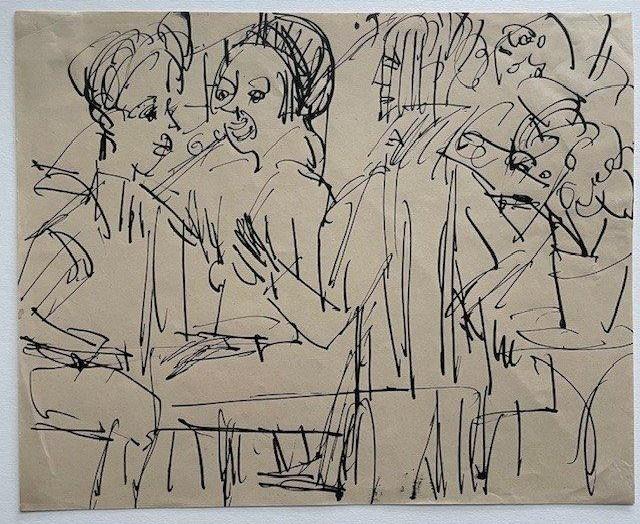
- Personengruppe im Gespräch
- 1920
- Tusche auf Papier ink on paper
- 16.8 x 21 cm

- Mädchenkopf – Fränzi (Head of a Girl – Fränzi)
- 1910 - 1910
- Bleistift auf braunem Papier (pencil on brownish paper)
- 33.2 x 42.8 cm
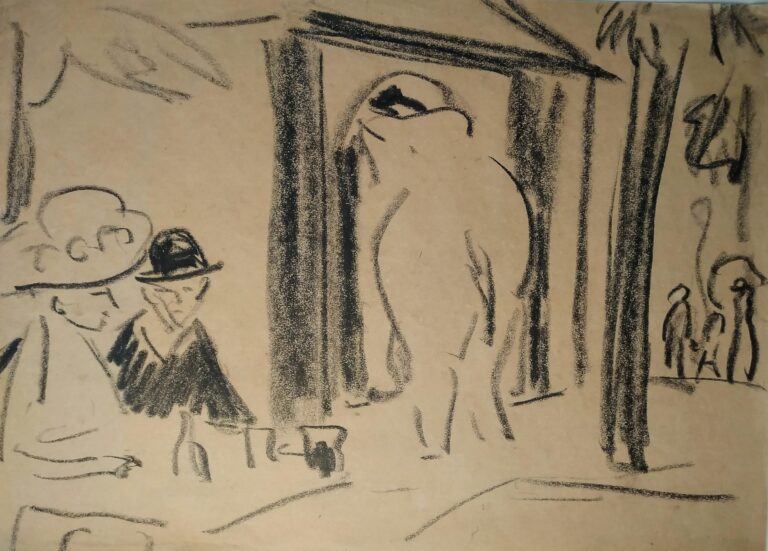
- Im Zoo (in the Zoo)
- 1910 - 1910
- Schwarze Kreide auf bräunlichem Papier (black chalk on brownish paper)
- 32.8 x 45 cm

- Im Atelier: Knieender und stehender weiblicher Akt mit Grammophon
- um 1929
- Schwarze Kreide auf chamois Papier
- 29.7 x 20.5 cm
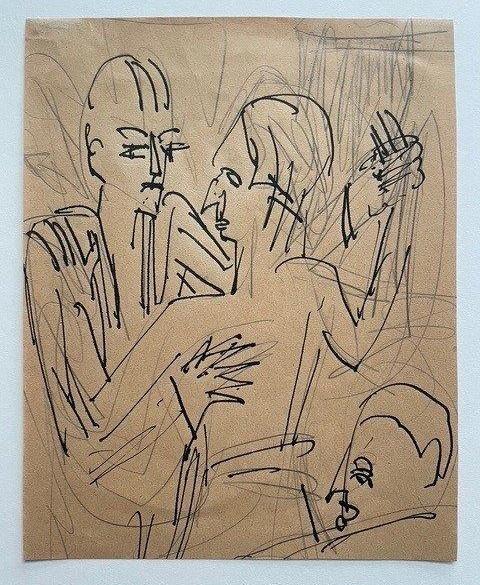
- Herr und Dame beim Tanz
- Um 1920
- Tusche auf Papier ink on paper
- 19.5 x 15.5 cm
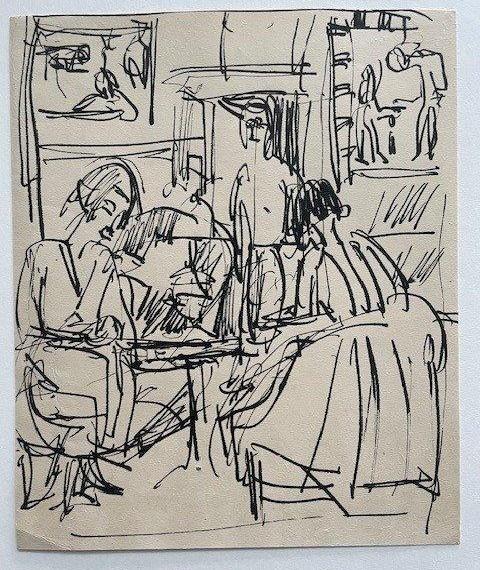
- Erna und Gäste im Haus in den Lärchen
- um 1921
- Tusche auf Papier ink on paper
- 18 x 15 cm